Strategic inventory solutions targeted at Mexican consumer demand hubs, backed by end-to-end supply chain integration.




The global trade architecture is undergoing a structural realignment. As enterprise procurement directors and multinational brands re-evaluate supply chain vulnerability, Mexico has emerged as the premier epicenter for nearshoring in the Western Hemisphere. Driven by the United States-Mexico-Canada Agreement (USMCA / T-MEC), geographical proximity to major North American consumer markets, and competitive regional labor, industrial corridors such as Monterrey, Tijuana, Querétaro, and Guadalajara are experiencing unprecedented capital inflows.
However, nearshoring to Mexico presents a complex paradox. While final product assembly and cross-border logistics gain friction-free advantages, local tier-2 and tier-3 raw material eco-systems in Latin America often lack the deep tooling infrastructure, raw component scale, and high-speed automated capacity found in Asia. Achieving a sustainable procurement architecture requires an advanced strategic framework: The Hybrid Dual-Sourcing Model.
To successfully optimize a balance between factory operations in Mexico and primary suppliers in China, corporate buyers must balance lead-time elasticity with Bill of Materials (BOM) cost structures. China’s massive manufacturing backbone—specifically Industry 4.0 smart factories and high-density industrial hubs like Yiwu and Guangdong—remains the indispensable engine for primary material production, custom molding, and high-volume component manufacturing.
A sophisticated procurement balance demands deep analytical insight into the operational competencies of both manufacturing environments. Below is a structural comparative breakdown designed for Supply Chain Directors and Chief Procurement Officers:
| Evaluation Vector | China Smart Factory Engine (Industry 4.0) | Mexico Local Industrial Assembly | Optimized Hybrid Balance Model |
|---|---|---|---|
| Tooling & Raw Materials | Unmatched cluster density; instant access to polymers, textiles, dies, and automated tooling. | Relies heavily on imported sub-components; higher localized raw material costs. | Primary tooling in China; rapid export of semi-finished goods to Mexico. |
| Unit Cost (BOM) | Ultra-low unit cost due to hyper-automated mass production & scale economies. | Higher unit labor & sub-component costs; lower freight overhead to North America. | Maximum ROI: High-density production in China + regional final trim in Mexico. |
| Logistics & Lead Times | 18-28 days ocean transit (Manzanillo/Lázaro Cárdenas ports). | 1-4 days inland trucking to US border (Laredo/Otay Mesa). | Buffer inventory stocked in Mexico; rolling replenishment from Chinese factories. |
| Customization Agility | Rapid OEM/ODM prototyping, advanced automated design iteration. | Fitted for final assembly, labeling, local compliance packaging. | Core production in China; market-specific packaging executed locally. |
| Supply Chain Risk | Single-source geopolitics and ocean freight rate volatility risk. | Localized labor union bottlenecks and industrial space capacity limits. | Zero single point of failure: Diversified multi-stage fulfillment. |
Leveraging semantic supply chain analytics and decades of boots-on-the-ground trade expertise, enterprise buyers must structure their vendor matrix across three distinct operational pillars:
Utilize Chinese Industry 4.0 factories to mass-produce complex raw components, high-precision injection molds, specialized fabrics, and hardware with maximum cost-efficiency.
Establish direct maritime consolidation channels from Ningbo/Shanghai to major Pacific entry points in Mexico (Puerto de Manzanillo, Lázaro Cárdenas) to reduce customs clearance drag.
Perform regional content value addition within Mexican industrial free-trade zones (IMMEX Program) to qualify for tariff exemption across North American trade networks.
Established in 2011, Yunis International Trade (HK) Co., Ltd. serves as an authorized, AAA-Grade import-export supply chain enterprise endorsed by the State Administration of Foreign Trade and Economic Cooperation and the General Administration of Customs. We operate as the critical strategic liaison for buyers seeking to balance manufacturing scale in China with operational agility in Mexico.
Understanding user search intent requires contextualizing supply chain balancing across real-world commercial ecosystems within Mexico:
For retail giants operating in Mexico City, Monterrey, and Puebla (e.g., Liverpool, Coppel, Walmart de México), high-volume consumer goods like plush slippers, seasonal footwear, and home accessories are sourced direct from Chinese automated factories for unbeatable margins.
Cancún, Riviera Maya, and Los Cabos hospitality markets demand large-scale commercial decor, artificial botanical installations, premium acrylic floral arrangements, and glass terrariums. Purchasing direct via Yiwu trade networks delivers unmatched aesthetic diversity at scale.
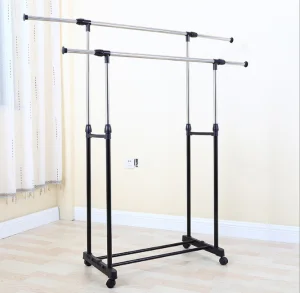
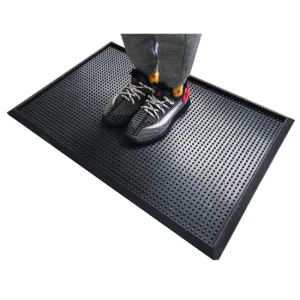
Sellers dominating Mercado Libre México and Amazon.com.mx utilize fast-moving merchandise—such as 3D self-adhesive wallpapers, rubber floor sanitizing mats, and portable drying racks—relying on unified warehouse consolidation in China to minimize stockouts.
Direct insights from Senior Supply Chain Specialists addressing high-intent queries from procurement executives.
While Mexico offers excellent nearshoring proximity to North America, localized Tier-2 supplier networks for raw polymer compounds, custom metal dies, and high-tech electronic components are limited. A 100% Mexican localized bill of materials frequently increases unit costs by 30-50%. Strategic procurement balances raw material sourcing in China with final assembly or strategic distribution in Mexico.
We execute strict on-site quality control inspections (QC) under ISO standards. Our inspectors evaluate raw materials, conduct inline production checks, perform 100% finished product sorting prior to packaging, and record video documentation during container loading to eliminate short shipments or defect claims.
Direct ocean freight from major Eastern China ports to Puerto de Manzanillo or Lázaro Cárdenas typically requires 18 to 25 days transit time. Express air freight services deliver within 4 to 7 business days for urgent sample approvals or high-value inventory replenishment.
Yes. Our in-house design and documentation teams ensure all products, barcodes, and master cartons strictly comply with Official Mexican Standards (Normas Oficiales Mexicanas - NOM), including Spanish language labeling, commercial information declarations, and import compliance requirements.
Explore our full suite of verified factory-direct commodities engineered for global procurement, retail distribution, and hotel supply chains.










Partner with Yunis International Trade Co., Ltd. for seamless factory sourcing, quality assurance, multi-supplier consolidation, and global shipping management tailored for Latin American growth.
Send Inquiry Now YUNIS Trading