Top 10 Grass Seed Mat Suppliers for Global Buyers

Time:2026-10-12 Author:Madeline
0%

Choosing a reliable Grass Seed Mat supplier requires more than comparing prices or attractive product photos. Global buyers need evidence of consistent quality, practical installation support, and dependable export service. This guide examines the Top 10 Grass Seed Mat Suppliers for Global Buyers through those essential criteria.

A dependable mat should protect exposed soil, hold seed in place, and support even germination during rain or wind. Product performance depends on fiber type, weave density, biodegradable timing, and packaging quality. Coconut, straw, and jute mats can behave differently across slopes, seasons, and soil conditions. The right choice should match the project’s climate, ground angle, and expected vegetation. Small details matter.

The comparison considers supplier experience, manufacturing capability, quality-control procedures, certifications, and documented customer feedback. It also reviews practical issues, including sample availability, roll dimensions, minimum order quantities, lead times, and international shipping communication. Clear technical data is valuable, but supplier claims still need checking. Buyers should request test reports, product specifications, installation guidance, and recent project references before placing large orders. A factory may offer excellent material yet struggle with packing or delivery coordination. That weakness can affect the entire project.

No ranking is perfect. Supplier capacity may change, and regional performance can vary. However, this review offers a structured starting point for importers, landscapers, contractors, and erosion-control distributors. It aims to support careful decisions based on measurable details, not vague promises. Verification remains essential.
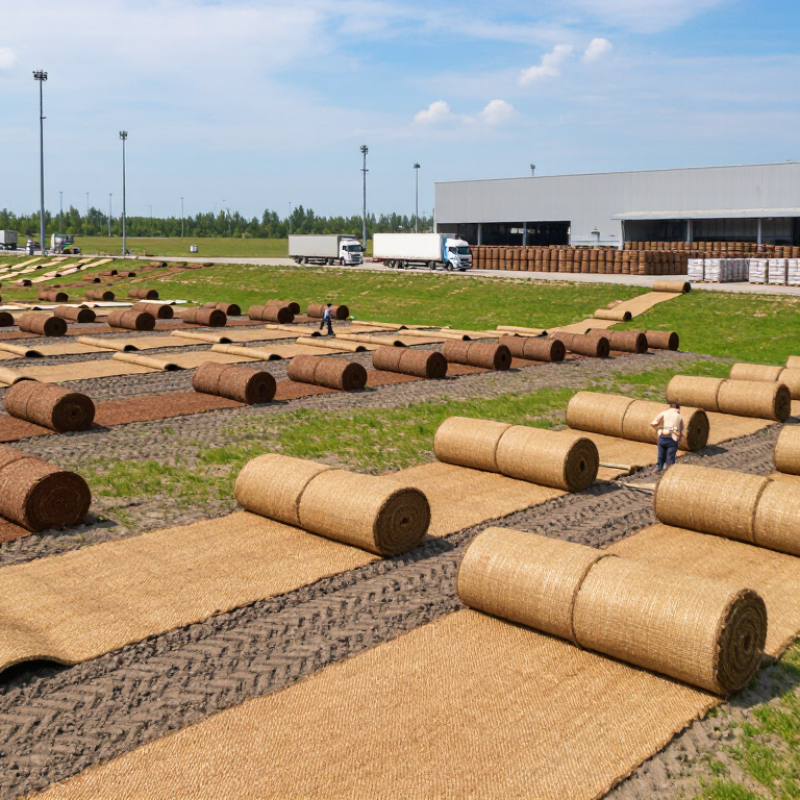
Top 10 Grass Seed Mat Suppliers for Global Buyers

Global Grass Seed Mat Market Scope: Product Types, Uses, and Key 2024 Data

Global grass seed mats serve erosion control, revegetation, and fast landscape establishment. Product types include straw mats, coir blankets, jute meshes, wood-fiber rolls, and synthetic erosion-control fabrics. Biodegradable options suit roadside slopes and residential projects, while stronger synthetic designs support steep embankments and drainage channels.

Grass seed selection depends on climate, soil, rainfall, and installation timing. A mat that performs well in a cool coastal region may fail under tropical storms. Field experience shows that poor soil contact often causes patchy germination, even when the seed mix is suitable. Keep this limitation visible.

Because grass seed mats are commonly grouped within erosion-control blankets, market figures vary. Grand View Research and Fortune Business Insights reported continued mid-single-digit growth for the broader erosion-control blanket sector in 2024. Their assessments place global annual demand near the billion-dollar range, although definitions differ. That difference matters for global buyers.

Use cases are expanding across construction restoration, mine-site rehabilitation, riverbank protection, and municipal landscaping. ASTM D6460 testing helps evaluate erosion performance under simulated rainfall. Buyers should request tensile strength, biodegradation period, roll dimensions, seed composition, and installation guidance. Certification claims need verification. Cheap rolls can become expensive after reseeding, labor, and slope repair.

How Grass Seed Mats Work: Biodegradable Fibers, Seed Density, and Erosion Control

Top 10 Grass Seed Mat Suppliers for Global Buyers

Grass seed mats combine seeds with biodegradable fibers, creating a protective layer over prepared soil. Common fibers include straw, jute, coir, and wood cellulose. Each material decomposes at a different speed. Straw breaks down quickly, while coir usually provides longer erosion protection. Moisture matters. During installation checks, the mat should touch the soil closely, without loose folds or exposed gaps.

Seed density affects coverage, germination, and cost. A dense mat may support faster visual growth, but excessive seed can create weak, crowded seedlings. Buyers should request the seed species, germination rate, purity data, and measured seeds per square meter. These details matter more than attractive packaging. For a dry slope, a supplier may recommend a different density than for a shaded garden. Local rainfall and soil temperature also change performance.

Erosion control depends on fiber strength, anchoring, and installation quality. On sloped ground, biodegradable stakes and overlapping edges help prevent water from lifting the mat. Heavy rain can still cut channels beneath poorly fitted material. That gap matters. Reliable suppliers should provide test methods, storage guidance, installation instructions, and clear delivery terms for international orders. I have found that product descriptions often simplify decomposition times. Real sites are messier. Fiber breakdown may slow in dry soil or accelerate under constant moisture. Buyers should compare field evidence, not promises alone.

Top 10 Grass Seed Mat Suppliers for Global Buyers - How Grass Seed Mats Work: Biodegradable Fibers, Seed Density, and Erosion Control

Profile Typical Supplier Product Primary Biodegradable Fiber Approx. Product Life Typical Basis Weight Typical Seed Density Open Area Suitable Slope Range Erosion-Control Performance Common Applications Installation Considerations
1 Lightweight straw blanket Wheat or barley straw with biodegradable netting Approximately 3–12 months About 220–340 g/m² Approximately 20–35 g/m² About 65–80% Low slopes, generally up to 3:1 Moderate Residential lawns, roadside shoulders, mild surface runoff Requires firm soil contact, adequate anchoring, and regular watering during germination
2 Double-layer straw blanket Double layer of agricultural straw with natural fiber stitching Approximately 6–18 months About 340–500 g/m² Approximately 25–40 g/m² About 55–70% Moderate slopes, generally up to 2:1 High Drainage channels, embankments, construction-site restoration Use closer staple spacing on slopes and place the blanket in the direction of water flow
3 Straw and coconut fiber blend Straw combined with coir fiber Approximately 12–24 months About 400–650 g/m² Approximately 25–45 g/m² About 50–70% Moderate to steep slopes, generally up to 1.5:1 High Longer-duration revegetation, cut-and-fill slopes, waterways Coir increases durability; trenching at the top and toe improves resistance to lifting
4 Open-weave coconut blanket Woven coconut coir yarn Approximately 24–36 months About 400–700 g/m² Approximately 20–40 g/m² About 35–65% Steep slopes, generally up to 1:1 when engineered correctly Very high High-flow channels, streambanks, steep slopes, wetland edges Needs strong anchoring and close soil contact; hydraulic design is recommended for channels
5 Lightweight jute erosion mat Jute yarn in an open mesh pattern Approximately 6–18 months About 250–450 g/m² Approximately 15–30 g/m² About 45–70% Low to moderate slopes, generally up to 2:1 Moderate to high Landscape restoration, grass establishment, low-impact drainage areas Jute absorbs moisture and should be installed soon after soil preparation
6 Wood-fiber erosion blanket Mechanically bonded wood fiber with biodegradable netting Approximately 6–12 months About 250–450 g/m² Approximately 20–35 g/m² About 55–75% Low to moderate slopes, generally up to 3:1 Moderate Seeded lawns, municipal landscaping, short-term soil protection Provides good moisture retention but is less suitable for concentrated water flow
7 Wood-fiber and straw composite Wood fiber blended with straw Approximately 9–18 months About 300–550 g/m² Approximately 25–45 g/m² About 50–70% Moderate slopes, generally up to 2:1 High Road construction, utility corridors, exposed soil after grading Balances moisture retention and surface protection; staple density should increase on steeper ground
8 Coconut fiber reinforced mat High-density coir with natural stitching or netting Approximately 24–60 months About 700–1,000 g/m² Approximately 25–50 g/m² About 30–55% Steep slopes and high-flow areas Very high Streambanks, coastal restoration, channels, severe erosion sites Heavy rolls require careful handling; design should account for flow velocity and shear stress
9 Seeded biodegradable mulch mat Paper, cellulose, straw, or wood fiber with pre-applied grass seed Approximately 3–12 months About 200–450 g/m² including seed Approximately 15–35 g/m² About 50–80% Low slopes, generally up to 3:1 Moderate Fast lawn establishment, landscaping, difficult-access locations Seed selection must match the local climate; avoid burying the mat beneath excessive soil
10 Biodegradable turf-reinforcement mat Coir, straw, or wood fiber in a three-dimensional structure Approximately 18–36 months About 500–900 g/m² Approximately 25–50 g/m² About 35–60% Moderate to steep slopes, drainage channels Very high Long-term vegetation establishment and areas exposed to concentrated runoff Requires engineered anchoring, continuous soil contact, and suitable grass species for root reinforcement

Note: The figures shown are typical specification ranges for biodegradable grass seed mats and erosion-control blankets. Actual performance depends on fiber quality, seed species, soil conditions, rainfall intensity, slope geometry, anchoring pattern, and installation quality.

Supplier Evaluation Standards: ASTM, EN, ISO, and Germination Rate Metrics

Top 10 Grass Seed Mat Suppliers for Global Buyers

When evaluating grass seed mat suppliers, certificates should support evidence, not replace it. ASTM methods may help assess tensile strength, water retention, erosion control, and biodegradable performance. Ask suppliers to identify the exact test method and edition. “ASTM compliant” is too vague without laboratory data.

EN requirements can clarify mat structure, environmental performance, and construction applications, but applicability depends on the product type. ISO 9001 may indicate controlled production processes, while ISO 14001 can support environmental management claims. Neither standard automatically proves strong seed performance. Request batch records, material composition, traceability, and independent inspection reports. On several projects, I have found that clear documentation mattered more than polished product samples. Still, paperwork can contain gaps.

Tips: Compare lot-specific germination rates, not general catalog figures. Check the species, testing date, purity, and laboratory method. A rate above 85% may look attractive, yet storage heat can reduce field results. Request samples from current production. Run a small site trial with local soil, slope, moisture, and temperature. Measure emergence after seven, fourteen, and twenty-eight days. Do not ignore seed distribution inside the mat. Uneven spacing creates visible bare strips. Supplier response time also reveals practical reliability. I would inspect packaging twice, because moisture damage is easy to miss. Comparative scoring can help, but the weighting may need revision after field testing.

Top 10 Grass Seed Mat Suppliers: Capacity, Regions, Certifications, and Pricing

Top 10 Grass Seed Mat Suppliers for Global Buyers

A practical review of the top ten grass seed mat suppliers should examine production capacity, not only product photographs. Large manufacturers may produce several million square meters yearly, while regional suppliers often handle smaller, customized orders. Monthly output matters during spring demand. Ask for confirmed lead times, minimum order quantities, and roll dimensions before comparing offers.

Supplier regions affect shipping, climate suitability, and technical support. Producers in Europe often serve restoration projects with strict documentation, while Asian factories may offer competitive prices and flexible private-label packaging. North American suppliers commonly provide products designed for highway slopes, lawns, and erosion control. Certifications deserve close checking. ISO 9001 can support process consistency, while FSC certification may verify responsible paper or natural-fiber sourcing. Some products also carry compostability or seed-quality documentation. Certification claims need current certificates, not attractive website language.

Pricing commonly ranges from about $0.35 to $1.80 per square meter, depending on seed type, fiber density, reinforcement, packaging, and order volume. Freight can change the final cost sharply. A low factory price may become expensive after ocean transport, insurance, and import handling. Request samples tested on similar soil, especially for dry slopes or heavy rain. I would also compare germination data and moisture retention under local conditions. One weakness remains: supplier capacity figures are sometimes self-reported. Buyers should verify them through factory audits, production records, or independent inspection. Better evidence takes time.

Global Buyer Guide: MOQ, Lead Time, Customization, Logistics, and Compliance

Top 10 Grass Seed Mat Suppliers for Global Buyers

Global buyers should compare grass seed mat suppliers beyond catalog prices. A practical request includes MOQ, roll dimensions, seed species, backing material, and packaging details. Many suppliers quote by roll or pallet, while custom projects may require higher minimum quantities. Ask for a pre-production sample. It can reveal uneven seed coverage, weak stitching, or excessive fiber dust.

Typical lead times range from two to six weeks after artwork and specifications are approved. Customization may include seed blends, mat thickness, biodegradable fibers, printed labels, and private packaging. However, custom seed mixes can extend production time. Small orders often move faster, but their unit costs may be higher. That trade-off is easy to miss.

Logistics planning should confirm carton strength, roll compression, pallet dimensions, and moisture protection. Request clear shipping terms and estimated loading dates. Compliance also needs early attention. Suppliers should provide seed names, batch information, germination data, material composition, and suitable export documents. Import rules differ by destination, especially for seeds and natural fibers. A phytosanitary certificate may be required. Do not assume one certificate works everywhere. In my experience, reliable suppliers answer technical questions with documents, not promises. Still, even careful buyers can overlook local labeling rules or seasonal port delays. Allow inspection time before shipment.

Top 10 Grass Seed Mat Suppliers: MOQ and Lead Time Benchmark

Anonymous supplier comparison for global buyers. Lower MOQ and shorter lead time generally improve purchasing flexibility.

The benchmark compares estimated minimum order quantities in rolls and standard production lead times in working days. Buyers should also confirm customization options, export packaging, logistics terms, phytosanitary documentation, product specifications, and destination-country compliance before placing an order.

FAQS

What are grass seed mats used for?

They help control erosion, support revegetation, and establish grass on exposed ground.

What types of grass seed mats are available?

Common materials include straw, coir, jute, wood fiber, and synthetic fabrics.

How should buyers choose a suitable mat?

Consider climate, soil type, rainfall, slope angle, and installation timing.

Why does soil contact matter during installation?

Poor contact can create patchy germination, even with suitable seeds.

Which projects commonly use these mats?

Applications include highway restoration, mine-site rehabilitation, riverbank protection, and municipal landscaping.

What information should buyers request from suppliers?

Request tensile strength, roll dimensions, seed composition, and expected biodegradation time.

How much do grass seed mats usually cost?

Reported prices often range from about $0.35 to $1.80 per square meter.

Can a low factory price reduce total project costs?

Not necessarily. Ocean freight, insurance, handling, reseeding, and slope repairs may increase the final cost.

How can buyers check supplier capacity and certification claims?

Ask for confirmed lead times, minimum order quantities, and production records.

What testing can help compare erosion-control performance?

Rainfall simulation testing can provide useful erosion-performance evidence.

Conclusion

This guide presents a practical overview of the global Grass Seed Mat market, covering major product types, application areas, and key 2024 market considerations. It explains how these mats combine biodegradable fibers, carefully distributed seed, and protective structures to support faster vegetation, improve soil stability, and reduce erosion on slopes, roadsides, construction sites, and landscape projects. Readers will also learn how fiber composition, seed density, moisture retention, and decomposition speed can influence performance in different climates and soil conditions.

The article introduces a structured method for comparing the top ten suppliers without focusing on brand names. Evaluation factors include production capacity, service regions, certifications, ASTM, EN, and ISO-related compliance, germination-rate testing, pricing, minimum order quantities, lead times, customization options, packaging, and transportation arrangements. A final buyer guide helps international purchasers assess technical documentation, quality consistency, environmental requirements, import procedures, and after-sales support before selecting a reliable supplier for their project needs.


Madeline

Madeline

Madeline is a dedicated marketing professional with a wealth of expertise in our company's core offerings. With a keen understanding of the industry, she brings a unique perspective to her role, consistently delivering high-quality content that highlights the superior aspects of our products. As......