Choosing the right Wall Grass Mat supplier can shape a project’s appearance, budget, and long-term performance. Global buyers often compare suppliers by product quality, production capacity, pricing, and export experience. However, attractive product photos rarely tell the whole story.
This guide introduces ten Wall Grass Mat suppliers serving international markets. It considers material density, backing strength, color consistency, UV resistance, and installation support. These details matter when a green wall faces strong sunlight, humidity, dust, or frequent handling. Reliable suppliers should provide clear specifications, realistic samples, packing details, and responsive communication. They should also explain minimum order quantities, lead times, warranty terms, and available customization.
Experience suggests that small differences can become expensive problems. A weak backing may wrinkle during installation. Uneven blades may look obvious across a large hotel wall. A delayed shipment can disrupt an entire retail opening. Still, supplier claims require careful checking. Certifications may differ by market, and sustainability statements should be supported by traceable material information. No supplier is perfect.
Buyers should request physical samples before approving bulk orders. They should compare color under natural and artificial light. Factory photographs, inspection records, and customer references can also improve confidence. This list is not a final judgment. It is a practical starting point for comparing manufacturers and wholesalers with greater care. Each buyer must match supplier capabilities with project size, climate, design expectations, and compliance needs. That extra review may feel slow. It often prevents costly surprises later.
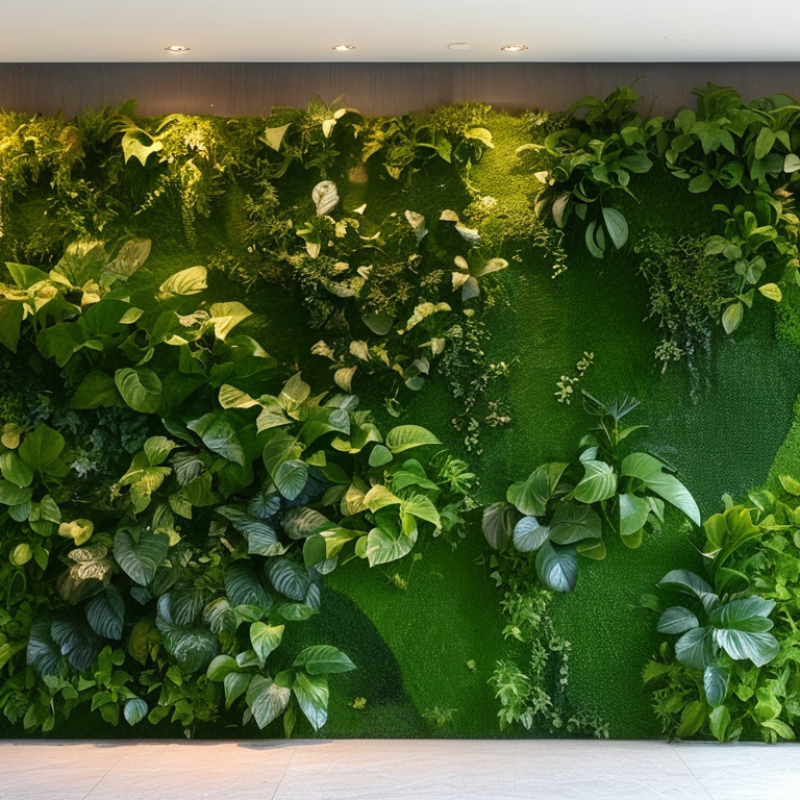
Wall grass mats are flexible panels covered with artificial grass fibers. Most use polyethylene or similar synthetic materials fixed to a mesh backing. The backing allows trimming, joining, and fastening on walls, fences, balconies, and display structures. Unlike living plants, these mats need no soil, irrigation, or regular sunlight.
I have installed comparable panels on a shaded courtyard wall. Cutting around sockets was easy, but uneven masonry created visible gaps. A level surface matters more than many buyers expect. Indoor mats can soften a reception area, restaurant wall, or exhibition booth. Outdoor versions need UV resistance, stable backing, and suitable drainage behind the panel. Always check the product’s fire performance for the building and installation location.
Global buyers should request fiber samples, backing details, dimensions, and independent test documents. Color can change between a digital image and a physical sample. It can also vary between production batches. Confirm packing methods, moisture protection, replacement sections, and installation instructions with each supplier.
My first material estimate was too low because I ignored trimming waste. Allow extra panels, especially around corners and irregular surfaces. Synthetic grass is practical, but it is not maintenance-free; dust still collects between the blades. A soft brush and gentle cleaning solution usually work better than aggressive washing.
Top 10 Wall Grass Mat Suppliers for Global Buyers
Key Criteria for Evaluating Global Wall Grass Mat Suppliers
Reliable supplier evaluation starts with the product, not attractive catalog images. Request physical samples and inspect the grass density, backing, edge finish, and color consistency. Run your fingers across the mat. Loose fibers often reveal weak bonding. Ask for UV-resistance, moisture-resistance, and fire-performance test reports. These documents should identify the material, testing date, and laboratory clearly.
Production capability matters when a project requires hundreds of square meters. Review factory quality-control procedures, batch records, and packaging methods. A serious supplier should explain how workers check dimensions, seams, odor, and surface defects. Ask how replacement pieces are handled. Small defects can become highly visible on a large feature wall.
Communication is another practical test. Send identical questions to several suppliers and compare response accuracy, not just speed. Confirm minimum order quantities, lead times, loading methods, and export documents before making payment arrangements. Check whether product specifications remain stable between samples and mass production. They sometimes do not. Request independent references or verified project evidence, while remembering that staged photos prove little. Pricing also deserves careful review. A low quote may exclude packaging, testing, trimming, or customs-related costs. Leave room for uncertainty, especially when installing in humid, sunny, or high-traffic environments.
| Rank | Supplier Profile | Primary Supply Region | Main Product Range | Common Materials | Typical MOQ | Standard Lead Time | Customization Capability | Quality & Compliance Evidence | Export Readiness | Evaluation Score |
|---|---|---|---|---|---|---|---|---|---|---|
| 1 | Profile A — Large-Scale Artificial Greenery Manufacturer | East Asia | Artificial boxwood, ivy, fern and mixed foliage wall panels | PE, PP backing, galvanized or coated steel support | 50–100 panels | 20–35 days | High; custom colors, panel sizes, logos and packaging | Batch inspection, UV-test reports and material declarations available on request | High | 9.3/10 |
| 2 | Profile B — Commercial Landscape Decorator | Southeast Asia | Modular vertical garden panels and outdoor privacy screens | UV-stabilized PE foliage, PP grid, aluminum framing | 100–200 panels | 25–40 days | High; project-based sizes and foliage density | UV-resistance documentation, inspection checklist and export packing standards | High | 9.0/10 |
| 3 | Profile C — Premium Interior Green Wall Specialist | Western Europe | Decorative moss, fern and premium botanical wall systems | Preserved moss, textile backing, recycled polymer components | 10–30 panels | 30–50 days | Very high; bespoke layouts, textures and acoustic options | Indoor-use specifications, fire-performance options and project documentation | Medium–High | 8.8/10 |
| 4 | Profile D — High-Volume Decorative Panel Exporter | East Asia | Flat grass mats, hedge panels and basic foliage tiles | PE, PP, polyester mesh | 200–500 panels | 15–30 days | Medium; standard designs with limited color changes | Pre-shipment inspection, carton specifications and product test samples | High | 8.6/10 |
| 5 | Profile E — Outdoor UV-Resistant Mat Producer | South Asia | Synthetic grass mats, balcony screens and garden wall coverings | UV-stabilized PE, latex or PP backing | 100–300 rolls | 25–45 days | Medium–High; roll widths, pile height and backing options | UV aging data, tensile-strength testing and packaging inspection | Medium–High | 8.4/10 |
| 6 | Profile F — Hospitality and Retail Project Supplier | North America | Interior green walls, reception backdrops and branded display panels | PE foliage, PVC-free backing options, aluminum frames | 20–75 panels | 30–55 days | Very high; design support, color matching and installation planning | Commercial project specifications, fire-rating options and installation manuals | Medium | 8.2/10 |
| 7 | Profile G — Mid-Market Garden Decoration Factory | Southeast Asia | Hedge mats, leaf panels and mixed grass wall coverings | PE, PP and plastic-coated wire | 100–250 panels | 20–40 days | Medium; standard products with private-label packaging | Incoming-material checks, production samples and basic UV documentation | Medium–High | 8.0/10 |
| 8 | Profile H — Eco-Focused Preserved Plant Supplier | Northern Europe | Preserved moss mats, lichen panels and natural-texture walls | Preserved moss, lichen, wood fiber and recycled backing | 10–40 panels | 35–60 days | High; natural color blends and custom compositions | Material-origin information, indoor-use guidance and sustainability documentation | Medium | 7.8/10 |
| 9 | Profile I — Small-Batch Custom Wall Mat Workshop | Eastern Europe | Custom artificial grass, floral panels and decorative screens | PE, polyester fabric, plywood or lightweight metal frames | 10–50 panels | 25–50 days | Very high; artwork, dimensions and mixed-material designs | Prototype approval, visual inspection and project-specific material records | Medium | 7.6/10 |
| 10 | Profile J — Value-Oriented Decorative Mat Distributor | Middle East | Standard artificial grass mats, hedge rolls and privacy panels | PE, PP, rubber or latex backing | 50–150 rolls | 20–45 days | Low–Medium; mainly standard catalog products | Supplier declarations, visual inspection and export carton requirements | Medium | 7.3/10 |
Note: Supplier profiles, commercial ranges and evaluation scores are presented as an anonymized buyer-screening framework. MOQ, lead time, certifications, test reports and export terms should be verified directly before purchase.
The strongest wall grass mat suppliers differ by product focus and market strength. The first group specializes in dense artificial turf mats for offices, retail walls, and hospitality interiors. Their key advantage is consistent color, UV resistance, and fast production. Another strong group supplies preserved moss and mixed greenery panels. These products offer softer textures and natural variation, but they need careful packaging and humidity control.
Several suppliers focus on modular wall panels with interlocking backs. They serve contractors who need quick installation across large projects. Custom-pattern suppliers support hotels, exhibition spaces, and branded interiors with tailored sizes and surface densities. Wholesale-oriented manufacturers often provide competitive container pricing and private packaging for distributors. Some regional producers perform better in nearby markets because delivery times are shorter and replacement panels are easier to obtain.
The remaining suppliers stand out through recycled backing materials, fire-performance documentation, or low-maintenance residential products. A reliable supplier should provide sample panels, material specifications, color references, installation guides, and realistic lead times. Ask about fading tests, backing strength, carton protection, and batch consistency.
Request evidence, not promises.
No supplier leads every category. A low price may hide thin foliage or weak adhesive backing. I have also seen attractive samples fail during transport. Buyers should compare landed cost, not only factory price. Market strength depends on more than production volume. It includes technical support, export experience, clear communication, and the ability to correct imperfect orders.
Comparing wall grass mat suppliers requires more than checking the lowest quote. Grand View Research valued the global artificial turf market at about USD 3.9 billion in 2023. Demand is growing, but product quality varies sharply. Ask for pile height, face weight, backing type, UV-resistance test results, and color-fade evidence. A dense mat should feel springy, not flat or brittle. Samples reveal this quickly.
Compare pricing by landed cost per square meter. Include packaging, tooling, inland transport, insurance, duties, and replacement pieces. A cheaper mat may use thinner backing or less stable polyethylene fibers. That difference becomes visible near sunny windows. Request a written quotation with tolerances, minimum order quantity, and payment terms. Be careful with vague “premium” claims.
Customization can include leaf density, panel size, logo-free patterns, backing color, and modular connectors. Confirm whether customization changes the lead time. Delivery performance deserves equal attention. The World Bank’s Logistics Performance Index shows substantial differences in customs efficiency and shipment reliability across markets. Ask suppliers for production schedules, carton dimensions, loading photos, and a pre-shipment inspection option. Independent inspection adds cost, but it may prevent a costly dispute. My own caution: sample approval is not enough. One production batch can still differ slightly. Require retained samples and clear acceptance criteria.
Selecting the right wall grass mat supplier starts with the project, not the catalog. Measure each wall, note indoor or outdoor exposure, and record moisture, sunlight, wind, and cleaning needs. Share these details with every shortlisted supplier. Their recommendations should match your conditions, not simply promote the thickest or cheapest mat.
Request physical samples before placing a large order. Check backing strength, fiber density, color consistency, drainage, and edge finishing under ordinary light. Ask for product specifications, installation guidance, quality-control records, and test reports relevant to your destination and use. A dependable supplier explains material composition, production tolerances, packaging, lead times, and replacement procedures without vague promises. Confirm whether the quoted price includes accessories, custom cutting, shipping protection, and after-sales support.
Communication is evidence. Notice how quickly the supplier answers technical questions and corrects unclear information. Compare warranties carefully; coverage periods alone can mislead. Review recent project photos, but verify that they represent the same product and installation method. No checklist is perfect. Color may shift between batches, and a sample may hide joining difficulties. Build a small test section when possible, then inspect it after cleaning and several days of exposure. A slightly higher quote may reduce installation waste, yet price is not proof of quality. Keep written records of every specification, revision, and approval before production begins.
: Common options include dense artificial turf, preserved moss, mixed greenery, and modular panels. Textures vary noticeably.
Modular panels with interlocking backs can simplify installation across large walls. They may reduce labor. Still, confirm joining quality before ordering.
Request samples, material specifications, color references, installation guides, and realistic lead times. Ask for evidence, not promises.
Record wall size, sunlight, moisture, wind, cleaning needs, and indoor or outdoor exposure. The thickest mat is not always suitable.
Check fiber density, backing strength, color consistency, drainage, and edge finishing under ordinary light. Look closely at the seams.
Not necessarily. Thin foliage, weak backing, poor packaging, or replacement delays can increase landed costs. Compare the complete delivered cost.
Ask about carton strength, moisture control, edge protection, and replacement procedures. Attractive samples can still arrive damaged.
Reliable suppliers answer technical questions clearly and correct unclear information. Written records matter. Keep every approved specification and revision.
Yes, when possible. Inspect a small area after cleaning and several days of exposure. It may reveal fading, joining problems, or unexpected maintenance needs. No checklist is perfect.
This guide explains what a Wall Grass Mat is, how it is used in interior decoration, commercial spaces, events, hospitality settings, and outdoor applications, and why it has become a practical option for creating a natural visual effect with limited maintenance. It also introduces the main criteria for evaluating suppliers, including material quality, product durability, safety standards, production capacity, customization services, communication, and experience with international orders.
The article compares ten supplier types and market strengths without focusing on brand names, helping global buyers understand differences in product range, pricing, quality control, design flexibility, packaging, and delivery performance. It also outlines a practical purchasing process: define project requirements, request samples, verify specifications, compare quotations, confirm customization details, review production and shipping schedules, and assess after-sales support. These steps can help buyers select a reliable Wall Grass Mat supplier that matches their budget, design goals, application environment, and delivery expectations.

YUNIS Trading