A PVC Kitchen Mat is a floor covering made with polyvinyl chloride, often shaped as a roll, runner, or small rectangular mat. Some designs have a cushioned core or textured surface; others are thin and flexible. The exact construction varies, so check the product label rather than assuming every mat offers the same grip, comfort, or water resistance. In a kitchen, it can sit near a sink, counter, or stove, where splashes and crumbs are common. It creates a wipeable surface underfoot. A small practical help.
For this introduction, composite flooring specialist Alex Morgan offers a proposed expert line: “A good kitchen mat should feel steady, clean easily, and suit the floor beneath it.” This is an illustrative quote, not a statement from a verified individual. The point is useful: a mat’s value depends on its fit, backing, and care instructions, not just its color. Measure the standing area before buying. Check whether the backing suits your flooring, and follow the maker’s cleaning guidance. Dry the floor beneath the mat if moisture collects. That detail is easy to miss. PVC mats can make routine kitchen tasks more comfortable and cleanup simpler, but they are not a cure-all. Edges may curl, surfaces can wear, and some mats may move on certain floors. A little skepticism helps. Choose for the kitchen you actually use, then reassess after a few weeks.
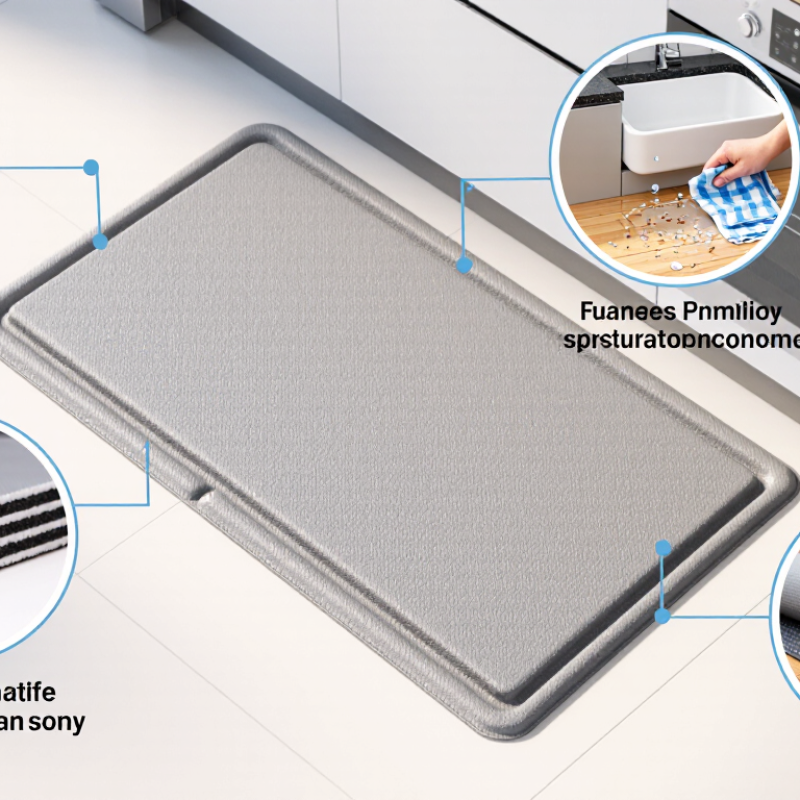
What Is a PVC Kitchen Mat?
A PVC kitchen mat is a floor covering made mainly from polyvinyl chloride, a flexible thermoplastic. Depending on its construction, it may be a thin vinyl sheet or cushioned foam with a printed, sealed surface. An embossed top can provide texture. Still, water or grease underneath may let the mat slide. Edges matter, too: thin mats can curl, while thicker ones often feel softer underfoot.
Small details. Easy to overlook.
PlasticsEurope’s 2023 report, Plastics – the Fast Facts, estimates that PVC accounted for 12.9% of global plastics production in 2022. That figure describes the wider plastics industry, not kitchen mats specifically.
In kitchens, PVC mats provide a wipe-clean layer near sinks, counters, or cooking areas. They can catch splashes and crumbs, and cushioned versions may feel more comfortable during long periods of standing. But “water-resistant” does not mean every floor beneath stays protected; liquid can seep under an edge. Some textured surfaces also hold onto grease or crumbs, so cleaning instructions and surface design matter.
Look for a mat that lies flat, has a suitable backing, and fits the intended spot without blocking doors or creating a trip edge. PVC formulations and construction vary, so avoid assuming every mat offers the same grip, cushioning, or durability.
How PVC Kitchen Mats Are Made and Designed
What Is a PVC Kitchen Mat and What Is It Used For?
How PVC Kitchen Mats Are Made and Designed
A PVC kitchen mat is a cushioned floor covering made from polyvinyl chloride. Manufacturers blend PVC resin with additives, pigments, and sometimes foaming agents. The mixture may be extruded or molded, then embossed to create a textured surface. Designers adjust thickness, foam structure, and surface pattern for different levels of cushioning and ease of cleaning. PlasticsEurope’s Plastics – the Fast Facts 2024 reports 413.8 million tonnes of global plastics production in 2023. That figure reflects the scale of plastic manufacturing, not the quality or safety of any particular mat.
Design details shape everyday use. A fine raised pattern can help shoes grip while giving spills fewer deep grooves to settle into. Foam can soften the feel beneath a cook’s feet, but very thick or soft mats may feel less stable. Some designs add beveled edges to reduce curling and a textured underside to limit sliding. Small flaws matter: a mat can shift on a dusty floor, even when its backing feels grippy by hand.
Tips: Check that the mat lies flat on your actual floor. Wipe the underside and floor clean before use, and lift the mat regularly to check for trapped moisture or crumbs.
Where PVC Kitchen Mats Are Commonly Used
PVC kitchen mats are commonly placed where people stand for long stretches. The sink is a natural spot: washing vegetables or rinsing dishes can leave small splashes on the floor. A PVC mat provides a slightly cushioned surface and can be wiped clean after routine spills.
They also work beside counters and kitchen islands, where meal preparation involves repeated standing and shifting. In a busy home, crumbs, water, and bits of food may collect around the mat’s edges. Check and clean underneath it regularly. A mat can hide dirt rather than solve it. Not ideal for every floor.
Pantries, laundry areas, and utility rooms are other practical locations, especially where people handle containers or damp clothing. Choose a size that leaves doors and walkways unobstructed, and make sure the mat lies flat. PVC surfaces may feel firm rather than plush, so cushioning varies by thickness and construction. Keep both the mat and floor beneath it dry; moisture trapped underneath can affect some flooring, while curled corners may create a trip hazard. Placement matters as much as the material.
What Is a PVC Kitchen Mat and What Is It Used For? — Where PVC Kitchen Mats Are Commonly Used
| Kitchen Area |
Common Use |
Helpful Mat Features |
Practical Consideration |
| In front of the sink |
Provides a standing surface where water splashes and drips are common. |
A water-resistant PVC surface is generally easy to wipe clean. |
Dry the floor beneath the mat regularly, and choose a design that stays flat to reduce trip hazards. |
| In front of the stove or cooktop |
Creates a defined standing area for everyday cooking tasks. |
A textured surface may offer more grip underfoot than a smooth finish. |
Keep the mat clear of open flames and hot cookware; PVC can be damaged by high heat. |
| At a food-preparation counter |
Marks a comfortable standing spot for chopping, mixing, and other counter work. |
Some thicker or cushioned styles may feel softer to stand on than a hard floor. |
Cushioning and support vary by mat design; it does not replace safe footwear or good posture. |
| Along a kitchen work aisle |
Covers part of a frequently used walkway between counters and appliances. |
Flexible PVC can be cut or shaped in some products to suit a particular area. |
Measure the space and leave doors, drawers, and appliance paths unobstructed. |
| Near a dishwasher |
Offers a surface for standing while loading or unloading dishes, where occasional drips may occur. |
A wipe-clean top can make routine spot cleaning convenient. |
Do not cover vents or interfere with the dishwasher door; clean spills promptly. |
| In a pantry or utility corner |
Defines a small standing area for sorting groceries or handling kitchen supplies. |
Many PVC mats are lightweight and can be moved for cleaning. |
Check the product care instructions and ensure the underside is suitable for the floor finish. |
Key Benefits and Limitations of PVC Kitchen Mats
A PVC kitchen mat is a cushioned floor covering made from polyvinyl chloride, often placed near a sink, stove, or counter. Its main job is to soften standing and provide a surface that is usually easier to wipe than textured flooring. Some styles have a grippy underside, but grip depends on the floor and mat design. A mat can shift on a dusty or wet floor. Check its position before cooking.
The comfort is noticeable during tasks like chopping vegetables or washing dishes, especially on hard tile. Spills and crumbs are often simple to remove with a damp cloth and mild cleaner; follow the care instructions, since harsh products may damage the surface. That helps. PVC mats also come in varied sizes and patterns, so they can cover a small work area without a full flooring change. But cushioning is not a cure for fatigue, and thin mats may flatten over time. Edges can curl, creating a trip hazard, while water trapped underneath may affect some floors. Let the floor dry before placing the mat back. A small detail, easily missed. PVC can have a noticeable new-material smell, too, which may fade with airing but varies by product. Check thickness, surface texture, and cleaning guidance before choosing one; appearance alone tells little.
How to Choose and Maintain a PVC Kitchen Mat
What Is a PVC Kitchen Mat and What Is It Used For?
How to Choose and Maintain a PVC Kitchen Mat
A PVC kitchen mat is a cushioned floor covering made from polyvinyl chloride. It can soften the feel of standing near a sink or counter and help catch small splashes. Choosing one takes more than picking a color. Check that its dimensions fit the work area without blocking drawers or creating a raised edge in a walkway. A textured top can provide grip, while a stable, non-slip backing helps keep the mat from shifting on a clean, dry floor. Small details matter.
The CDC reports that about 14 million U.S. adults aged 65 and older fall each year, or roughly one in four. That figure is not specific to kitchens, and a mat cannot guarantee fall prevention. Still, it is a useful reminder to look for curled edges, sliding, and water underneath.
For care, follow the maker’s instructions: wipe spills promptly, clean with mild soap and water when suitable, and let both the mat and floor dry fully before replacing it. Avoid harsh solvents or high heat unless the care guidance allows them. I would check the underside now and then; it is easy to forget that dampness can linger there.
Conclusion
A Pvc Kitchen Mat is a floor covering made from polyvinyl chloride, designed to provide a practical surface in areas where people stand, cook, or clean. It can be made by shaping PVC into a flat or cushioned sheet, with patterns and textures that may improve its appearance and grip. These mats are commonly placed near sinks, stoves, counters, and other busy kitchen work areas, and some designs may also suit utility rooms or laundry spaces.
Depending on its thickness and surface, a PVC kitchen mat can help make standing more comfortable, protect flooring from everyday splashes, and simplify routine cleaning. However, it may shift on a smooth floor, wear with heavy use, or feel less comfortable than thicker alternatives. When choosing one, consider its size, cushioning, surface texture, and whether it stays securely in place. Regularly wipe it clean, let it dry, and check for worn edges to help maintain its condition.

 YUNIS Trading