Global buyers are reassessing how mats perform across vehicles, workplaces, hotels, gyms, and public buildings. A Customized Mat must fit more than a measured space. It should match traffic levels, moisture exposure, cleaning routines, branding needs, and regional climate conditions.
Grand View Research estimates that the global flooring market was worth more than USD 380 billion in 2023. Its outlook also indicates steady growth through 2030. This broader trend supports stronger demand for durable, design-oriented floor products. Mordor Intelligence similarly identifies commercial renovation, vehicle ownership, and interior customization as important market drivers. However, these reports do not isolate Customized Mat sales perfectly. The market remains fragmented.
That matters to procurement teams.
Supplier claims can look impressive, yet testing methods often differ. A low-cost PVC mat may perform well in a dry showroom but curl beside a wet entrance. A recycled-rubber product may reduce material impact, but its odor and cleaning requirements still need evaluation. Buyers should request abrasion results, slip-resistance data, dimensional tolerances, colorfastness records, and sample approvals.
Andrew Morlet, a recognized circular-economy expert, stated, “A circular economy is based on designing out waste and pollution, keeping products and materials in use, and regenerating natural systems.” His principle is highly relevant to Customized Mat sourcing. Better design can reduce replacement frequency and material waste.
This guide reviews the 2026 best Customized Mat suppliers for global buyers. It considers manufacturing experience, customization depth, quality controls, certifications, lead times, and after-sales support. No supplier is perfect. Regional freight costs, inconsistent testing, and incomplete sustainability claims still require careful verification.
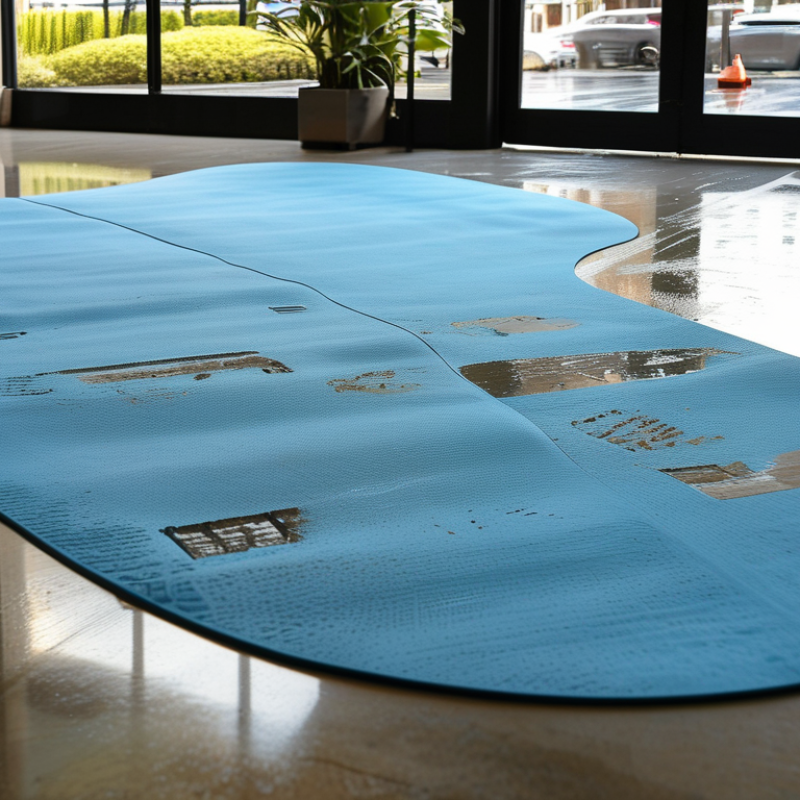
Customized mats are floor products engineered for a buyer’s location, traffic level, safety needs, and visual identity. They may use specific dimensions, edging, fibers, backing, colors, drainage holes, or printed designs. A warehouse entrance might need a low-profile mat that handles pallet traffic. A hotel lobby may require softer fibers, precise branding, and easy replacement.
The market is expanding. Grand View Research valued the global floor coverings market at approximately USD 419 billion in 2023 and expects continued growth through 2030. This broader category includes carpets, rugs, and mats. Its scale shows why sourcing decisions deserve technical attention. Fit matters. A poorly sized mat can curl, trap moisture, or obstruct doors. Buyers should request abrasion data, slip-resistance testing, backing specifications, colorfastness results, and cleaning instructions. These details are more useful than attractive product photos.
Customized mats also help global buyers manage different climates and building standards. Coarse fibers can remove grit in dry regions, while absorbent surfaces support wet entrances. Recycled materials may reduce resource use, but they do not automatically guarantee durability. That assumption needs questioning. The 2024 Global Sustainable Textiles report from Textile Exchange notes continued pressure to increase recycled and preferred-fiber use across textile supply chains. Buyers should still verify fiber content, factory quality controls, sample approvals, and production tolerances. A small tolerance error becomes expensive across thousands of units. Reliable suppliers explain limitations clearly, even when the answer is inconvenient.
2026 Best Customized Mat Suppliers for Global Buyers
How to Evaluate Customized Mat Suppliers in 2026
Evaluating a customized mat supplier requires more than comparing prices. Request physical samples with your logo, border stitching, backing, and exact dimensions. Check whether the sample matches the approved drawing. Small differences become expensive across a large shipment.
Ask for material specifications, production tolerances, color references, and test reports. A reliable supplier should explain fiber content, slip resistance, water absorption, odor control, and cleaning performance. Confirm whether testing was completed by an independent laboratory. Documents without traceable details deserve careful questions.
Look beyond the showroom. Review factory capacity, quality checkpoints, packaging methods, and production schedules. Ask how rejected pieces are recorded and replaced. A clear answer shows practical experience. It is also wise to request a small pilot order before signing a long-term contract.
Communication matters. Suppliers should provide written quotations, revision records, inspection photos, and realistic lead times. Extremely low prices may hide thinner materials or weaker backing. That risk is easy to underestimate.
Mistakes still happen.
Global buyers should examine destination-market requirements, labeling rules, and import documents with qualified local professionals. Requirements can change, and supplier advice may be incomplete. A dependable partner admits limitations, corrects errors, and keeps evidence for every important production decision.
How to Evaluate Customized Mat Suppliers in 2026
This chart presents a practical 100-point evaluation framework for customized mat suppliers. Quality consistency and customization capability receive the highest weights because they directly affect product performance, fit, and repeat-order reliability. Buyers should verify each category through samples, inspection records, compliance documents, production audits, and written commercial terms.
2026 Best Customized Mat Suppliers for Global Buyers
Material selection should begin with use, not appearance. Natural rubber offers strong grip and resilience, while PVC supports sharp printing and lower unit costs. Recycled polyester can improve color detail, but its environmental value depends on verified recycled content. Textile Exchange reported that global fiber production reached about 124 million tonnes in 2023. That figure makes material traceability increasingly important for buyers.
Design capability is more than uploading a logo. Ask suppliers for physical samples, color cards, border proofs, and artwork templates. Dense nylon can create cleaner entrance patterns, while coarser polypropylene may reduce cost. For wet areas, request slip-resistance results and drainage details. The 2024 Global Resources Outlook linked rising material use with growing environmental pressure. A supplier should therefore explain backing composition, production waste, and packaging choices clearly.
Manufacturing depth separates a catalog seller from a reliable partner. Compare mold-making, digital printing, tufting, edge binding, sample approval, and inspection procedures. Request abrasion, colorfastness, dimensional stability, and odor test records. ISO 9001 certification can support process control, but it does not guarantee every shipment. My own checklist would still require batch photos and random inspection. Claims can look polished. Evidence is better. Lead times also need scrutiny, especially when custom molds, mixed sizes, or several delivery regions are involved.
| Supplier Capability Profile | Primary Materials | Typical Product Designs | Surface and Functional Options | Manufacturing Processes | Typical Custom MOQ | Indicative Production Lead Time | Quality and Compliance Checks | Best Fit for Global Buyers |
|---|---|---|---|---|---|---|---|---|
| Commercial Entrance Mat Profile | Aluminum, polypropylene, polyamide, PVC, natural rubber | Modular scraper mats, recessed systems, roll-up entrance mats, logo panels | Brush inserts, textile strips, drainage channels, beveled edges, custom colors | Aluminum extrusion, die cutting, tufting, profile assembly, heat sealing | 100–300 pieces or approximately 100–300 m² | 25–45 days after artwork and specifications are approved | Dimensional inspection, insert adhesion, load testing, color matching, packaging inspection | Hotels, offices, airports, shopping centers, and high-traffic public buildings |
| Logo and Promotional Mat Profile | Nylon, polypropylene, polyester, nitrile rubber, PVC | Printed logo mats, tufted logo mats, branded welcome mats, event mats | High-resolution graphics, anti-slip backing, overlock borders, custom shapes | Digital printing, dye injection, computer tufting, laser cutting, rubber backing | 50–200 pieces, depending on size and design complexity | 15–35 days after digital proof approval | Colorfastness, print resolution, edge stitching, backing adhesion, dimensional accuracy | Retail chains, restaurants, exhibitions, franchise networks, and corporate campaigns |
| Industrial Oil-Absorbent Mat Profile | Nitrile rubber, natural rubber, PVC, polypropylene, absorbent nonwoven fibers | Anti-fatigue workstation mats, oil-resistant floor mats, modular drainage mats | Oil resistance, chemical resistance, beveled safety edges, drainage holes, anti-slip textures | Compression molding, extrusion, vulcanization, die cutting, surface embossing | 200–500 pieces or approximately 300–800 m² | 30–60 days, including tooling when required | Slip resistance, tensile strength, compression recovery, oil exposure, chemical compatibility | Factories, workshops, garages, warehouses, kitchens, and maintenance areas |
| Anti-Fatigue Ergonomic Mat Profile | Foamed PVC, polyurethane, nitrile rubber, natural rubber, EVA | Single-layer standing mats, multi-layer comfort mats, interlocking floor tiles | Closed-cell foam, beveled edges, drainage holes, textured surfaces, custom thickness | Foam extrusion, lamination, molding, CNC cutting, edge finishing | 100–300 pieces or approximately 200–500 m² | 25–50 days after sample confirmation | Thickness, density, rebound performance, slip resistance, edge safety, odor evaluation | Production lines, cashier stations, service counters, laboratories, and standing work areas |
| Outdoor and Weather-Resistant Mat Profile | Polypropylene, high-density polyethylene, PVC, synthetic rubber, recycled polymers | Patio mats, poolside mats, entrance scraper mats, balcony and deck mats | UV resistance, water drainage, mold resistance, open-grid construction, custom colors | Injection molding, extrusion, welding, die cutting, modular assembly | 300–1,000 pieces, depending on tooling and size | 30–60 days, with seasonal capacity planning recommended | UV aging, water drainage, dimensional stability, mold resistance, slip performance | Hospitality, residential developments, leisure facilities, outdoor retail, and marine environments |
| Sustainable and Recycled Mat Profile | Recycled PET, recycled rubber, natural fibers, jute, coir, recycled polypropylene | Recycled-fiber entrance mats, coir mats, modular recycled-rubber mats, eco floor runners | Low-VOC materials, latex or PVC-free backing, natural textures, recycled content declarations | Needle punching, tufting, vulcanization, weaving, lamination, water-based printing | 200–500 pieces or approximately 300–1,000 m² | 35–70 days because recycled-material availability may vary | Recycled-content verification, restricted substances testing, VOC testing, colorfastness | Green building projects, sustainability-focused procurement, offices, and hospitality groups |
| Safety and Containment Mat Profile | Nitrile rubber, PVC, polyurethane, polypropylene, aluminum | Spill-control mats, tray mats, anti-slip platform mats, wet-area drainage mats | Raised borders, liquid containment, perforated drainage, high-grip patterns, custom dimensions | Molding, thermoforming, extrusion, welding, die cutting, profile bonding | 100–400 pieces, depending on mold and product size | 30–65 days, including prototype and tooling approval | Slip resistance, leakage testing, chemical resistance, edge integrity, dimensional inspection | Food processing, laboratories, chemical handling, healthcare, and wet industrial areas |
| Premium Textile and Hospitality Mat Profile | Polyamide, wool, polypropylene, polyester, natural rubber, nitrile rubber | Custom hotel runners, luxury lobby mats, carpet tiles, decorative area mats | Cut-pile or loop-pile surfaces, custom patterns, stain resistance, acoustic backing, bound edges | Tufting, weaving, digital textile printing, latex coating, precision cutting, binding | 50–200 pieces or approximately 100–500 m² | 35–75 days after design, color, and sample approval | Pile weight, colorfastness, abrasion resistance, backing adhesion, fire-performance documentation | Hotels, resorts, restaurants, premium offices, cruise facilities, and interior-design projects |
Note: MOQ and lead-time figures are indicative industry ranges for customized production. Final requirements vary according to material availability, product dimensions, tooling, artwork complexity, testing scope, and destination-market regulations.
Reliable customized mat suppliers should provide more than attractive samples. They need documented control over rubber, PVC, foam, fabric, inks, and adhesives. Quality systems such as ISO 9001 can support consistent production, but certification alone proves limited information. Buyers should request current certificates, testing scopes, and issuing-body details.
Material safety requires closer review. Depending on the destination, suppliers may need REACH, RoHS, CPSIA, or other applicable compliance evidence. These requirements differ by product use and market. Ask for laboratory reports linked to the exact material and color. A report for black rubber may not cover a printed blue surface. Small details matter.
Factory audits can reveal practical risks. Check batch records, mold maintenance, carton labeling, and final inspection photos. Traceability should connect raw materials with finished cartons. Suppliers should also explain defect limits, corrective actions, and replacement procedures. Clear answers build confidence.
But compliance work is rarely perfect. A valid certificate can expire, and test results may not represent every shipment. Buyers should schedule periodic checks rather than rely on old documents. One overlooked issue is packaging ink transfer during humid transport. Trial shipments and independent inspections can expose weaknesses early. This approach feels slower, yet it protects long-term purchasing decisions.
Textile Exchange’s 2024 Materials Market Report recorded 124 million tonnes of global fiber production in 2023. Material selection therefore affects both cost and sustainability claims. Request certification evidence, production capacity, and a clear price-validity period. My procurement mistake was comparing unit prices before checking carton dimensions.
Sampling needs practical testing. Order a pre-production sample with your final logo, thickness, color, and backing. Measure length and width after shipment.
Test water absorption, edge strength, odor, and slip resistance on a clean floor. Keep one approved sample as the reference standard.
Use a written defect limit, such as acceptable color variation and stitching tolerance. A cheap sample can hide expensive production problems.
Shipping should be calculated from packed volume, not product weight alone. UNCTAD’s Review of Maritime Transport 2024 states that over 80% of global merchandise trade by volume moves by sea.
Ask for both port-to-port and delivered quotations. Confirm loading dates, export documents, carton markings, and insurance responsibilities.
Select suppliers after checking factory audits, sample consistency, response speed, and two recent buyer references. Do not trust every impressive certificate. Verify the issuing body.
: It is a mat made for specific dimensions, traffic levels, materials, colors, and safety needs. A warehouse may need a low-profile design. A hotel lobby may need softer fibers and precise edging.
An oversized mat can block doors or create curled edges. A small mat may leave wet or dirty floor areas exposed. Measure the entrance carefully. Small errors become costly.
Request material specifications, slip-resistance results, colorfastness records, and cleaning instructions. Ask for abrasion data and backing details. Traceable test information matters more than attractive photos.
Request a physical sample with the final artwork, border, backing, and dimensions. Compare it with the approved drawing. Small differences are easy to miss.
Natural rubber can provide strong grip and resilience. PVC can support detailed printing and lower costs. Recycled polyester may improve color detail, but recycled content needs verification.
Coarse fibers can remove grit in dry regions. Absorbent surfaces can support wet entrances. Wet areas also need drainage details and slip-resistance evidence.
Review mold-making, printing, tufting, edge binding, and inspection procedures. Ask how rejected pieces are recorded and replaced. Factory claims are not enough.
Yes, a small pilot order can reveal production and packaging problems. Check dimensions, color, odor, backing, and edge quality. Pilot orders cost time. They may prevent larger losses.
No, that assumption needs review. Verify recycled content, production waste, packaging choices, and durability. A greener material can still fail early and require replacement.
Look for written quotations, revision records, inspection photos, and realistic lead times. The supplier should explain limitations clearly. Uncomfortable answers may be useful.
Customized Mat solutions help global buyers meet specific requirements for branding, safety, comfort, durability, and environmental performance across commercial, industrial, hospitality, retail, and residential applications. In 2026, selecting the right supplier requires more than comparing product images or basic prices. Buyers should assess a supplier’s design support, material options, production capacity, quality-control procedures, communication efficiency, and ability to handle international orders.
Important comparison points include rubber, PVC, nylon, polyester, and other suitable materials, as well as printing, embossing, edge finishing, anti-slip structures, water absorption, and size customization. Buyers should also review relevant quality standards, testing reports, certifications, packaging practices, and compliance with destination-market requirements. A practical selection process includes requesting technical details, confirming samples, evaluating workmanship, comparing total costs, checking minimum order quantities, and clarifying production and shipping schedules. By considering quality, customization capability, reliability, documentation, and long-term cooperation potential, global buyers can choose a supplier that delivers consistent value and dependable Customized Mat products.

YUNIS Trading